ABA, Speech Therapy or Occupational Therapy: Which Does Your Child Need?
In short
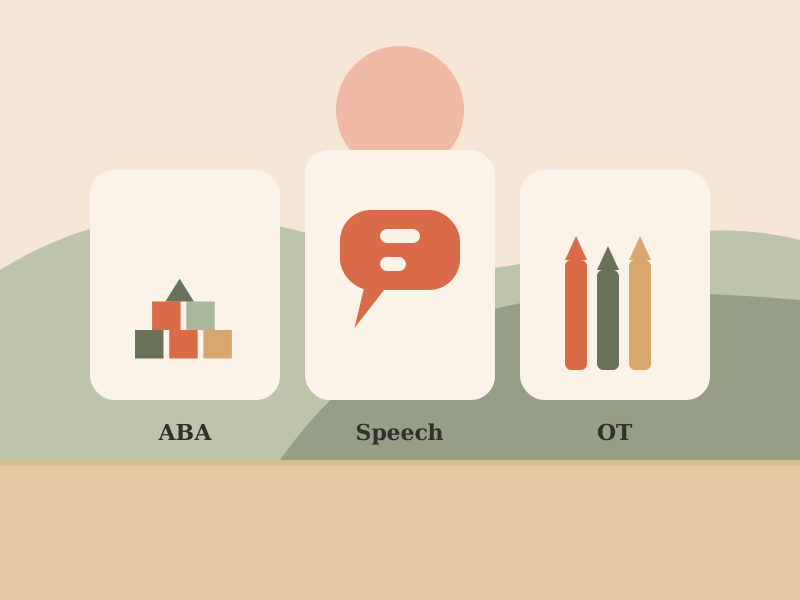
- ABA helps children learn new skills step by step, using clear goals, encouragement and data.
- Speech therapy focuses on understanding and using language, including pictures or devices.
- Occupational therapy focuses on everyday skills like dressing and eating, fine motor skills and sensory needs.
- Many children benefit from more than one. An assessment shows where to start.
Three therapies, three different jobs
When a child is diagnosed with autism, or a doctor suggests "therapy", parents in Pakistan are often offered several options at once. ABA, speech therapy and occupational therapy (OT) can overlap, but each has a different focus. Knowing the difference helps you choose where to start and how to spend your time and money well.
ABA therapy
Applied Behaviour Analysis (ABA) uses what we know about how people learn. A skill is broken into small steps, each step is taught and practised, and the child is encouraged with things they enjoy. Progress is measured every session, so the plan can change when something is not working.
ABA can look like structured table work, where a skill is practised a few times in a row, or like play, where learning happens naturally around a child's interests. Good ABA uses both.
- Typical goals: asking for things, following instructions, waiting and turn-taking, play skills, daily routines, and reducing behaviour that gets in the way of learning
- Who provides it: behaviour analysts, and trained therapists working under their supervision. Always ask who supervises your child's programme.
Speech and language therapy
The CDC describes speech and language therapy as the most common developmental therapy for autistic people. It helps a child understand and use language. Communication does not have to mean speech: some children use signs, gestures, pictures or a device.
- Typical goals: understanding words and instructions, first words and sentences, clearer speech, using pictures to communicate, and conversation skills
- Who provides it: a qualified speech and language therapist
Occupational therapy
OT helps children do the everyday things they need to do, as independently as possible. It can include sensory work for children who are very sensitive to, or seek out, sounds, touch or movement.
- Typical goals: dressing, eating, toileting, holding a pencil, using scissors, coordination, and coping with sensory overload
- Who provides it: a qualified occupational therapist
Side by side
| ABA | Speech therapy | Occupational therapy | |
|---|---|---|---|
| Main focus | Learning skills and behaviour | Language and communication | Daily living, motor and sensory skills |
| Might help if your child | Has frequent meltdowns, finds routines or instructions hard, or is not yet asking for things | Is not yet using words, or is hard to understand | Struggles with dressing, eating, handwriting or noisy places |
| Progress tracked by | Data every session | Speech and language goals | Functional skill goals |
Which should come first?
It depends on what is getting in your child's way the most. A child who cannot yet tell you what they want may need communication goals first, which ABA and speech therapy can both work on. A child who becomes very distressed in daily routines may benefit most from ABA. A child who cannot cope with clothes, food textures or noise may need OT early on.
An assessment helps you decide. Be wary of anyone who says one therapy is the only answer for every child.
Can they work together?
Yes, and they work best when the therapists share goals. For example, if your child's speech therapist is teaching a new word, the ABA therapist can practise the same word in sessions and you can use it at home. Ask your centres to talk to each other, or share your child's written goals with each one yourself.
Watch your child's week, too. Three therapies on top of school and travel across the twin cities can be a lot for a small child. It is often better to do fewer things well.
Where Beyond Milestones fits
We focus on one-to-one ABA therapy and school readiness, with monthly parent training. If your child also sees a speech or occupational therapist, we are happy to share goals and work alongside them. If your child might need one and does not yet have one, we can suggest where to look. You can also read what ABA therapy costs in Pakistan.
Common questions
Is ABA the same as behaviour therapy?
ABA is one kind of behaviour therapy, based on the science of how people learn. It uses clear goals, encouragement and data collected every session.
Can ABA replace speech therapy?
Not fully. ABA often includes communication goals, but a speech and language therapist has specialist training in language, speech sounds and alternative communication, such as pictures or devices.
How many therapies should my child have at once?
There is no fixed rule. Start with the area that is getting in your child's way the most, keep the week manageable, and review every month with your therapists.
Sources
This article is general information, not medical advice. We cannot diagnose online. Speak to your paediatrician or a qualified professional about your child.